


Your Pre-Purchase Checklist for a Smarter Vehicle Investment
Buying a car—whether new or used—is a big decision, and taking the time to inspect it properly can save you from expensive problems later. A quick test drive or a glance at the body isn’t enough. Knowing what to look for, inside and out, helps ensure you’re making a smart and reliable choice.
Check the Vehicle History Report
Start by reviewing the vehicle history report, especially when buying a used car. This report gives insight into the car’s past, including:
- Accident history
- Title status (clean, salvage, rebuilt, etc.)
- Odometer readings
- Ownership records
- Service and maintenance history
You can get a vehicle history report from services like CARFAX or AutoCheck. If the seller refuses to provide one, consider it a red flag. A clean history report doesn’t guarantee a perfect car, but it’s a critical step in spotting major red flags early on.
Inspect the Exterior
A visual inspection of the car’s exterior can tell you a lot about how the vehicle has been treated and whether it may have been in a collision.
What to look for:
- Paint inconsistencies: Mismatched paint or uneven surfaces could signal body repairs.
- Rust spots or bubbling paint: These could indicate hidden corrosion.
- Body panel alignment: Uneven gaps may suggest prior accident damage.
- Lights and lenses: Check for cracks, fogging, or water inside headlights or taillights.
- Tires: Uneven wear may indicate alignment or suspension issues. Also, check the tires’ age—even good tread doesn’t help if they’re old and brittle.
Examine the Interior
The condition of the interior tells a story about how the car was maintained and can also hint at hidden issues like water damage.
Inside the car, check:
- Upholstery and carpet: Look for tears, stains, or signs of mold.
- Odor: A musty smell may indicate water damage or leaks.
- Dashboard lights: Turn the ignition on and make sure all warning lights illuminate, then go off after the engine starts.
- Electronics: Test the radio, navigation system, power windows, locks, sunroof, and seat adjustments.
- Seat belts: Ensure they retract properly and latch securely.
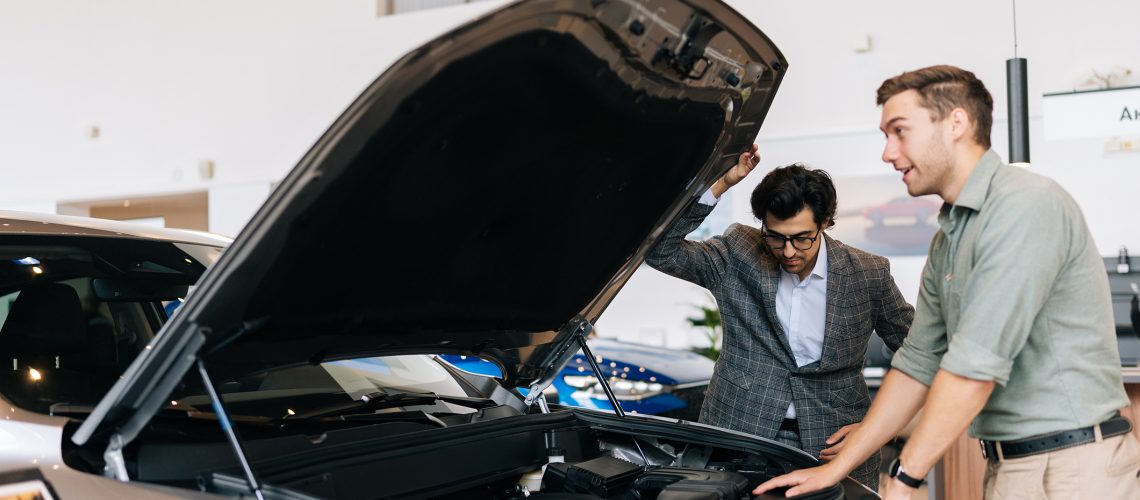
Pop the Hood
Even if you’re not a mechanic, there are a few basic things you can check under the hood to get a feel for the car’s condition.
Look for:
- Fluid levels: Check the oil, coolant, brake fluid, and transmission fluid. Low or dirty fluids may suggest poor maintenance.
- Leaks: Any visible wet spots or buildup around hoses and engine components could point to current or future issues.
- Belts and hoses: Look for cracks, fraying, or wear.
- Battery condition: Check for corrosion on terminals and ask about its age.
Take It for a Test Drive
A test drive is your chance to see how the car performs in real-world conditions. Don’t just drive around the block—try to drive on different types of roads (residential, highway, uphill, etc.).
Pay attention to:
- Steering responsiveness
- Brake performance and noise
- Transmission smoothness
- Engine noise or hesitation
- Suspension comfort over bumps
- Warning lights on the dashboard
Listen closely, feel how the vehicle handles, and don’t ignore anything that feels off or unexpected.
Ask for Service Records
If you’re buying a used car, ask for maintenance and service records. These documents give insight into how well the vehicle has been cared for and can reveal recurring issues or missed maintenance.
Key things to look for:
- Regular oil changes
- Brake service history
- Tire replacements or rotations
- Any major repairs or part replacements
A seller who can provide a solid history of service is often a sign of a well-maintained vehicle.
Consider a Pre-Purchase Inspection
Before committing to a purchase, especially for a used vehicle, it’s a good idea to have the car inspected by an independent, trusted mechanic. This inspection usually includes a deep look at the engine, drivetrain, suspension, brakes, and more.
Why it’s worth it:
- Identifies hidden issues you may not spot yourself
- Provides leverage during price negotiations
- Offers peace of mind before signing any paperwork
Taking the time to check all of these areas before buying a car can protect you from future headaches and unexpected costs. It’s all about being thorough and making sure the vehicle is truly worth the investment.